

Key Points
- Three main causes of AC evaporator coil leaks: formic acid corrosion from volatile organic compounds, dirt and mold weakening the coil structure, and physical damage from vibration and wear.
- According to the U.S. Department of Energy, a refrigerant leak causes your AC system to work significantly harder to achieve the same cooling output — directly increasing energy bills and accelerating compressor wear.
- Six warning signs of an AC coil leak: weak or no cool air, inconsistent temperatures throughout the home, a sweet chemical odor near the unit, longer cooling times, hissing sounds, and ice forming on the exterior of the unit.
- Technically, a leaking AC coil can be sealed — but sealing is almost always a temporary fix; coils have multiple hard-to-reach areas and often have more than one leak, making full replacement the more reliable and cost-effective long-term solution.
- Refrigerant handling requires EPA Section 608 certification — coil repair and refrigerant recharge are never DIY jobs; improperly handled refrigerant is hazardous and illegal to release into the atmosphere.
- When choosing an AC repair company in Fillmore, verify certification, relevant service experience, and recent customer reviews before committing.
- Contact Fix It Fast Plumbing Heating & Air for professional AC coil leak diagnosis and repair throughout Fillmore and Ventura County, CA.
Is your air conditioner no longer cooling your home the same way? You might be dealing with an evaporator coil leak. Considering the crucial role this component plays in AC system efficiency, you might be asking yourself, “Can a leaking AC coil be repaired?”
Read on to learn all you need to know about AC coil leak repair and how you can get professional AC repair in Fillmore, CA.
What Causes Your AC Coil To Leak?
Your AC or evaporator coil is one of the main reasons your air conditioner is able to cool your Fillmore home. It absorbs the warm air and uses a refrigerant gas to transfer the heat outside. Unfortunately, it can develop a leak that impacts its ability to do its job. Here’s how those leaks come about.
AC Coil Corrosion
One of the leading causes is formic acid corrosion — a result of the chemical reaction that takes place between the unit’s copper coil and the volatile organic compounds in your home.
What are volatile organic compounds? These are the gases that common household products like air fresheners, cleaning detergents, and some flooring materials emit. When they react with copper, the formic acid created can corrode the coil. Adding high humidity or excess moisture to the mix only worsens the situation.
Why Fillmore homes may be at elevated risk: Ventura County’s warm, dry climate means air conditioners run for extended periods — increasing the total exposure time between copper coils and indoor VOC concentrations. Newer, well-sealed homes that retain indoor air also tend to have higher VOC concentrations than older, draftier construction, making formic acid corrosion a growing concern in modern builds throughout the area.
Dirt and Mold
Dirt and mold notoriously cause clogs that do more than block airflow. They also weaken your coil’s structure, making it more vulnerable to leaks.
How to prevent dirt and mold from damaging your coil: The evaporator coil stays damp during normal operation as it pulls moisture from indoor air — creating an ideal surface for mold and debris accumulation. The most effective prevention is consistent air filter replacement (every 30–90 days depending on household conditions) and annual professional AC maintenance that includes a coil inspection and cleaning. A clean coil is a structurally sound coil.
Physical Damage
Whether it’s due to routine wear and tear or standard vibrations, physical damage to the AC coil can also leave you dealing with refrigerant leaks.
The vibration factor: AC systems vibrate continuously during operation, and over years of use, this vibration can work loose the fittings, connections, and joints around the coil. On older systems, these micro-movements gradually stress the copper tubing until hairline cracks form. This is one reason why systems over 10 years old are significantly more likely to develop coil leaks than newer installations — and why AC replacement becomes a more cost-effective conversation when an aging system develops its first major coil issue.
How Can I Tell When I Have an AC Coil Leak?
Refrigerant leak detection is all about monitoring your HVAC unit’s performance. Here are a few warning signs that can help drive you to the right conclusion so you can fix the problem sooner rather than later.
Weak or No Cool Air
An AC coil leak greatly impacts how effective your air conditioner is at cooling your home. If the leak is minor, the cool air coming from your HVAC unit will be weak. In extreme cases, though, there’ll be no cool air at all.
Inconsistent Temperature
When the cool air coming from your AC unit is weak, inconsistent temperatures will become more of an issue — some rooms may feel significantly warmer than others, or the system may cool adequately in the morning but struggle by mid-afternoon when outdoor temperatures peak.
Strange, Sweet Odor
Who doesn’t like their Fillmore home smelling nice? However, if you’re currently noticing a sweet odor that wasn’t there before, your HVAC unit might be in trouble. That unusual aroma could be the result of a refrigerant leak and tends to get more intense whenever you have your air conditioner on.
Why you should act immediately on this smell: Modern refrigerants like R-410A are not acutely toxic in small concentrations, but prolonged exposure in enclosed spaces can cause dizziness and respiratory irritation. More importantly, refrigerant is a greenhouse gas that is illegal to knowingly vent into the atmosphere under EPA regulations — if you suspect a refrigerant leak, stop running the unit and call a certified technician promptly.
Additional Warning Signs
Other worrying signs you should look out for include:
- Longer cooling times — the system runs longer than usual to reach the set temperature
- Hissing sounds — refrigerant escaping through a crack or pinhole produces an audible hiss near the indoor unit
- Increased energy bills — a system low on refrigerant works harder and longer, consuming more electricity
- Ice on the exterior of the unit — ice forming on the refrigerant lines or outdoor unit indicates the refrigerant pressure has dropped enough to cause freezing at the coil
Can You Repair a Leaking AC Coil?
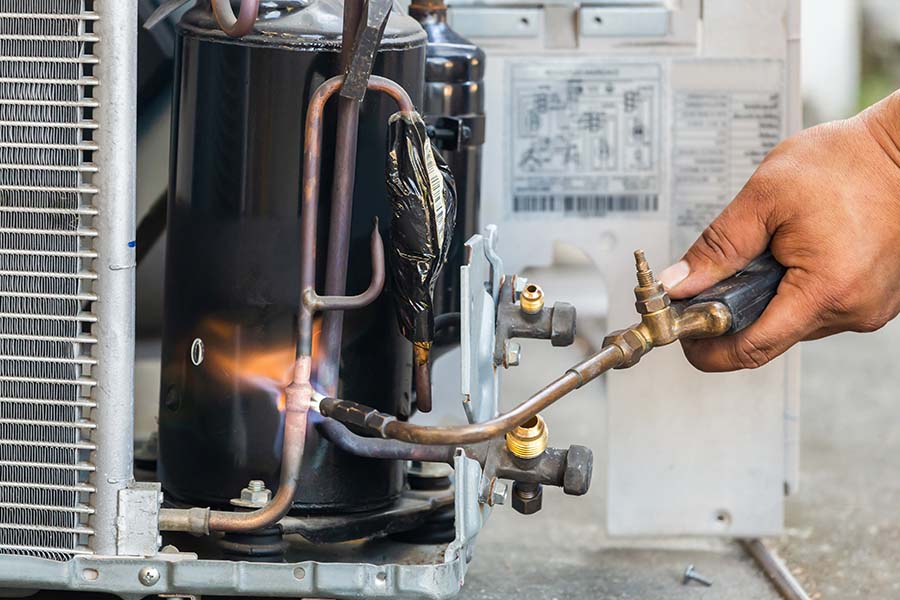
Technically, yes, you can repair a leaking AC or evaporator coil. The bad news is that this is a lot easier said than done, and largely depends on how severe the leak is and where it is.
Your AC coil is quite a large component with plenty of hard-to-reach areas. What’s more, the coil might have more than one leak, and finding them all is extremely challenging. While you can seal the leaks, at best, this will only be a temporary solution.
So, can a leaking AC coil be repaired? Yes — but replacing it is often the more reliable and cost-effective solution to take.
Repair vs. replace — how to make the decision:
Situation | Recommended Action |
Single, accessible leak on a system under 8 years old | Repair may be viable |
Multiple leaks or hard-to-reach location | Replacement typically more cost-effective |
System over 10 years old | Replacement strongly recommended |
Refrigerant is R-22 (older systems) | Replacement — R-22 is discontinued and expensive |
Repair cost exceeds 50% of replacement cost | Replacement is the better investment |
This is never a DIY repair. Refrigerant handling requires EPA Section 608 certification — it’s a federal requirement, not just a best practice. Releasing refrigerant into the atmosphere is illegal. Attempting to seal or recharge a coil without certification risks health hazards, legal liability, and further damage to the system. Always use a certified AC technician for any refrigerant-related work.
Choosing the Right AC Repair Company in Fillmore
Replacing your leaky AC coil requires plenty of expertise and experience, which calls for a professional repair company. The problem is — how can you ensure you make the right choice?
When looking for an AC repair company you can trust, we recommend considering the following:
- Certification — always work with a company that holds EPA Section 608 certification for refrigerant handling, as well as proper state contractor licensing; in California, HVAC contractors must hold a C-20 Warm-Air Heating, Ventilating, and Air-Conditioning Contractor license
- Services offered — you want to pick a company that specializes in the service you need; a contractor who handles AC repair, AC replacement, and coil-specific work regularly is better equipped than a generalist
- Reviews — checking online reviews helps you determine the kind of track record the company in question has; look specifically for reviews mentioning coil repairs, refrigerant work, or AC replacement to confirm relevant experience
Key Takeaways
An AC evaporator coil leak in your Fillmore home is caused by formic acid corrosion from household VOCs, dirt and mold accumulation, or physical damage from years of vibration. Six warning signs point to a coil leak: weak or absent cool air, inconsistent room temperatures, a sweet chemical odor, longer cooling times, hissing sounds, and ice on the unit or refrigerant lines. While coil sealing is technically possible, it’s almost always temporary — full coil replacement is the more reliable long-term solution, especially on systems over 10 years old or those using discontinued R-22 refrigerant. This is never a DIY job — EPA Section 608 certification is required for any refrigerant handling. When choosing an AC repair company in Fillmore, verify EPA certification, California C-20 licensing, and relevant coil repair or replacement experience. Contact Fix It Fast Plumbing Heating & Air for expert AC coil diagnosis and repair throughout Fillmore and Ventura County, CA.
Professional AC Repair in Fillmore, CA — Fix It Fast
Can a leaking AC coil be repaired? Here at Fix It Fast Plumbing Heating & Air, we’re all about implementing the most effective solution — ensuring the smooth, efficient running of your AC unit for the long term.
Make us your trusted source for professional AC repair and AC replacement services in Fillmore, CA. Contact us today to schedule a consultation.