
You’re considering a tankless water heater for your Moorpark home, but is it the best choice? On one hand, tankless systems promise energy efficiency and endless hot water, but they also demand a higher initial investment and potentially tricky installation. Before making a decision, it’s important to evaluate your household’s hot water needs, current plumbing setup, and whether regular maintenance fits your routine. Are the long-term savings worth the upfront costs? To see if going tankless aligns with your lifestyle and budget, let’s navigate these factors.
Understanding Tankless Water Heaters
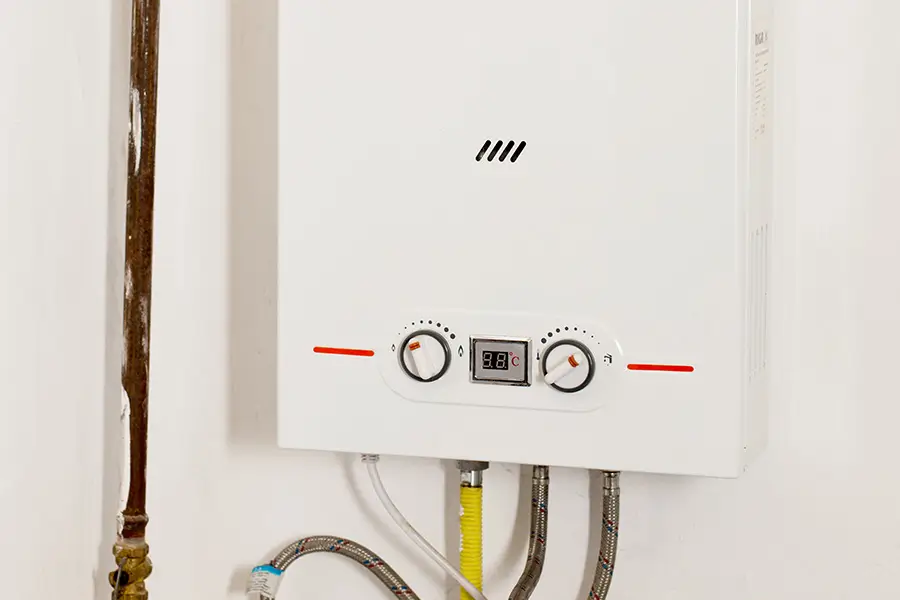
Tankless water heaters, or on-demand or instantaneous water heaters, operate by heating water directly without using a storage tank, guaranteeing a continuous hot water supply whenever needed. When you turn on a hot water tap or start your dishwasher, cold water travels through a pipe into the unit. A gas burner or an electric element heats the water, delivering a consistent flow of hot water. This system eliminates standby heat losses associated with traditional tank water heaters, where hot water is stored and maintained at a set temperature, even when not in use.
Understanding the flow rate is essential. Tankless heaters have a flow rate measured in gallons per minute (GPM), which indicates how much hot water the unit can deliver. Selecting the right GPM for your household needs guarantees efficiency and reliability. Additionally, you should consider the rise in temperature and the difference between the incoming cold water temperature and the desired hot water temperature. A higher temperature rise requires more energy.
You’ll also need to familiarize yourself with venting requirements for gas models and electrical load specifications for electric units, guaranteeing safe and efficient operations tailored to your home’s infrastructure.
Benefits of Going Tankless
Switching to on-demand water heaters offers significant advantages, such as energy efficiency due to the elimination of standby heat loss and the ability to provide an uninterrupted supply of hot water tailored to your household’s flow rate and temperature rise requirements. These tankless systems deploy heat exchangers that activate only when you need hot water, drastically reducing energy consumption. This means you’re conserving energy and reducing your carbon footprint—a crucial consideration for those aiming to serve the environment.
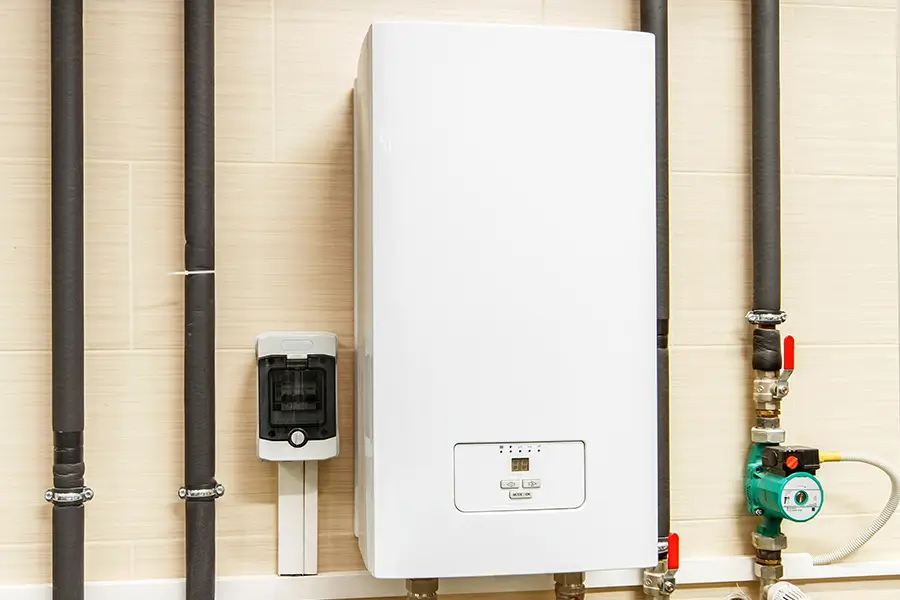
Tankless water heaters are compact, freeing up valuable space in your home. Their wall-mounted design allows for flexible installation, which is perfect for homes with limited space, further optimizing your living area. Additionally, these units boast a longer lifespan, often exceeding 20 years with proper maintenance, ensuring you provide your household with consistent service for decades.
Furthermore, by investing in a tankless system, you can experience improved water quality. Traditional storage tanks can corrode over time, leading to rust and sediment build-up. In contrast, tankless models eliminate such risks, enhancing hygiene and protecting your family’s health. By choosing a tankless water heater, you’re meeting your household’s needs and contributing positively to the greater good.
Energy Efficiency Considerations
When evaluating the energy efficiency of on-demand water heaters, factors like flow rate, temperature rise, and the unit’s Energy Factor (EF) rating must be taken into account to guarantee peak performance. The flow rate, measured in gallons per minute (GPM), determines the volume of hot water the unit can deliver. You’ll want a model that meets your household’s peak demand without overextending its capabilities.
Temperature rise refers to the difference between the incoming water temperature and the desired output temperature. In Moorpark, where groundwater temperatures vary, ensuring that your tankless heater can handle the required temperature rise is important. The EF rating, which quantifies how efficiently an appliance converts energy into usable heat, is significant. Higher EF ratings indicate greater efficiency, reduced energy consumption, and lower utility bills.
Consider the modulation mechanism, which adjusts energy output based on real-time demand, further enhancing efficiency. Additionally, installing a heater with condensing technology can reclaim heat from exhaust gases, minimizing waste. By thoroughly understanding these technical aspects, you can select a tankless water heater that saves energy and aligns with your commitment to serving others through sustainable living choices.
Installation and Costs
Installing an on-demand water heater involves evaluating available space, existing plumbing infrastructure, and potential electrical or gas line upgrades to guarantee seamless integration and peak performance. You’ll need to assess whether your current system can support the increased demand for energy or if modifications are necessary. For example, tankless units often require a higher BTU (British Thermal Unit) input, which may necessitate upgrading your gas lines. Similarly, verify that your electrical panel can handle the additional load for electric models, which may require a dedicated circuit.
Costs can vary considerably based on these requirements. The initial price of a tankless unit may range from $500 to $2,000, depending on the model and capacity. However, installation costs can add an additional $1,000 to $3,000, especially if considerable retrofitting is needed. Working with a qualified installer who understands local building codes and can provide a detailed breakdown of the expenses involved is essential. Investing in professional installation confirms that the system operates efficiently and safely, ultimately serving the household’s needs effectively. Weigh these upfront costs against long-term savings on energy bills to determine the best investment for your home.
Maintenance Requirements
After installation, regular maintenance of your tankless water heater is vital to confirm peak performance. This requires periodic descaling to prevent mineral buildup and routine system checks to validate efficiency and functionality. Minerals such as calcium and magnesium can accumulate inside the heat exchanger, reducing efficiency and potentially leading to costly repairs. You should flush your system annually using a descaling solution to remove these deposits. This process involves disconnecting the water supply, attaching a pump, and circulating the solution through the system to dissolve mineral buildup.
Routine system checks are equally important. Inspect the inlet screen filter regularly to ensure it’s free from debris that can obstruct water flow and compromise performance. The venting and exhaust systems should also be checked for blockages to maintain safe and efficient operation. It’s advisable to consult your heater’s manual for specific maintenance intervals and procedures, as they can vary based on your area’s model and water quality.
For those who desire to serve others by promoting sustainable and efficient energy use, understanding these maintenance needs enhances the appliance’s longevity and contributes to a more eco-friendly household. Regular upkeep empowers you to offer reliable hot water, enhancing comfort and convenience for everyone in your home.
Lifespan and Durability
A tankless water heater’s longevity often surpasses traditional tank models, boasting up to 20 years with proper maintenance and care. This extended lifespan can greatly benefit you if you value long-term investments, as it reduces the frequency of replacements, thereby saving resources and minimizing environmental impact. The absence of a storage tank mitigates corrosion and sediment buildup risks, common culprits of premature failure in tank-based systems.
To guarantee your tankless water heater reaches its full potential, consider these key factors:
- Routine Descaling: Hard water mineral deposits can affect efficiency. Implement a regular descaling schedule to maintain peak performance.
- Professional Servicing: Engage certified technicians annually to inspect and service components like heat exchangers and burners.
- Quality Installation: Verify the heater is installed by experienced professionals to prevent future operational issues.
Performance in Moorpark’s Climate
In Moorpark’s mild to warm Mediterranean climate, tankless water heaters efficiently provide on-demand hot water due to their ability to function effectively without the energy losses associated with maintaining a heated storage tank. These systems utilize high-efficiency heat exchangers, which transfer thermal energy directly to the water as it flows through the unit. This process eliminates standby heat loss, a common inefficiency in traditional tank-based systems, making tankless options particularly suitable for your location.
The moderate temperature fluctuations in Moorpark’s climate enhance the performance of tankless water heaters, as they don’t need to compensate for extreme cold. This means your heater operates with consistent efficiency year-round, optimizing energy consumption and reducing your utility costs. The absence of a tank also means you won’t experience heat loss when ambient temperatures affect stored water.
You’ll appreciate the precision of temperature control, which guarantees your household receives a steady supply of hot water tailored to your demands. Additionally, the reduced risk of mineral build-up in the system—common in areas with hard water—further prolongs the efficiency of tankless units. By choosing a tankless system, you’re enhancing your home’s efficiency and contributing to more sustainable energy practices.
Water Usage and Demand
Understanding your household’s water usage patterns is vital for optimizing the performance and efficiency of a tankless water heater. It directly impacts the unit’s ability to deliver consistent hot water flow rates and effectively meet demand peaks. By analyzing your consumption habits, you can select a heater that aligns with your needs, preventing issues such as temperature fluctuations and insufficient supply during peak usage times.
Tankless water heaters are known for their on-demand heating capability, eliminating the standby energy losses common with traditional tank systems. However, they have limitations based on flow rate capacity. It’s important to evaluate your household’s peak demand, which refers to the maximum simultaneous water usage, to guarantee the unit’s flow rate can handle it. Consider these factors:
- Simultaneous Usage: Evaluate if multiple showers, laundry, and dishwashing occur concurrently, requiring higher flow.
- GPM (Gallons Per Minute): Calculate the total GPM required by all fixtures to determine the heater size.
- Seasonal Variations: Consider water temperature changes during different seasons that can affect heater performance.
Potential Drawbacks
While tankless water heaters offer energy efficiency, they can present challenges such as higher upfront costs and potential difficulty in maintaining consistent water temperatures during simultaneous high-demand usage. The initial investment for a tankless system is often considerably more than traditional water heaters due to complex installation requirements and the need for specialized equipment. You must consider installing venting systems and possibly upgrading your gas lines or electrical systems to accommodate the unit’s requirements, which can increase the cost further.
Another drawback is the ‘cold water sandwich’ effect, where you might experience fluctuations in water temperature when multiple fixtures are in use. This can be particularly inconvenient if your household frequently requires simultaneous hot water access, such as showers running while the dishwasher operates.
Moreover, regular maintenance is essential for tankless systems to guarantee top performance. Mineral buildup in the heat exchanger can affect efficiency and longevity, necessitating periodic descaling. If you’re committed to serving others, you want reliability in your water heating solution, and these potential drawbacks require careful consideration to determine if a tankless system aligns with your household needs and budget constraints.
Is Tankless Right for You?
Considering your household’s hot water demands and installation constraints, a tankless water heater could be viable if you prioritize energy efficiency and manage the upfront investment and necessary system upgrades. Tankless systems, or on-demand water heaters, only heat water as needed, which can lead to substantial energy savings compared to traditional storage tank systems. However, evaluating your specific requirements is essential, as these units may not be ideal for every situation.
To determine if a tankless water heater suits your home, consider the following:
- Flow Rate Requirements: Examine your household’s simultaneous hot water usage; tankless units have a maximum flow rate that might not suffice during peak demand.
- Installation Feasibility: Check if your existing plumbing and electrical systems can accommodate the necessary modifications, such as venting or electrical upgrades, for a tankless model.
- Long-term Savings vs. Initial Cost: While the initial investment is higher, tankless systems can offer lower operating costs over time, contributing to potential savings on utility bills.
Ultimately, if you’re dedicated to reducing energy consumption and have the means to support the change, a tankless water heater can enhance your home’s efficiency and sustainability, providing reliable service to meet your family’s needs.
Conclusion
In Moorpark, you could save up to 34% on energy bills with a tankless water heater, according to the U.S. Department of Energy. The benefits might outweigh the drawbacks if your household has high water demand and you’re ready for the upfront investment and regular descaling. Consider your existing plumbing and maintenance willingness. Ultimately, a tankless system could be a long-term win for your home’s efficiency, aligning with your budget and environmental goals.
Frequently Asked Questions
How Does a Tankless Water Heater Impact Home Resale Value?
A tankless water heater can enhance your home’s resale value by improving energy efficiency and offering modern convenience. Buyers appreciate low utility costs and space-saving benefits, making your property more attractive in a competitive real estate market.
Are There Any Aesthetic Differences Between Tankless and Traditional Water Heaters?
Imagine sleek, compact designs that save space. Unlike bulky traditional tanks, tankless water heaters integrate seamlessly with your home’s aesthetics. Their on-demand technology eliminates large storage tanks, offering a modern, unobtrusive look while enhancing energy efficiency.
Can Tankless Water Heaters Work During a Power Outage?
During a power outage, tankless water heaters can’t operate without a battery backup or generator. Unlike traditional water heaters, they rely on electricity to power internal electronics and ignition systems, which are essential for heating water.
Do Tankless Water Heaters Make Noise During Operation?
Surprisingly, your tankless water heater might serenade you with its hums. The noise stems from the combustion fan and gas ignition process. It’s a small trade-off for consistent hot water, ensuring your guests’ comfort and satisfaction.
Are There Any Tax Credits or Rebates for Installing Tankless Water Heaters?
Federal tax credits, potentially covering 10% of costs, are available for tankless water heaters qualifying under the Energy Star program. California often offers additional rebates through local utilities. Check DSIRE for specific Moorpark incentives.