
Key Points
- Tankless water heaters heat water on demand — eliminating standby heat loss and providing an endless hot water supply without storing a single gallon.
- According to the U.S. Department of Energy, tankless water heaters can be 24–34% more energy efficient than conventional storage tank heaters for homes that use 41 gallons or less of hot water daily.
- Tankless units last 20+ years — significantly longer than traditional tank water heaters, which average 10–15 years.
- Their compact, wall-mounted design frees up floor space and allows flexible installation near the point of use — in a garage, attic, closet, or exterior wall.
- Many tankless models are ENERGY STAR certified, operate at 80–90%+ efficiency, and can reduce water heating costs by hundreds of dollars per year.
- A tankless water heater can meaningfully increase your home’s resale value by appealing to energy-conscious buyers who recognize lower long-term operating costs.
- Tankless systems require minimal maintenance — typically just an annual inspection and periodic descaling in hard water areas.
- Thinking about making the switch? Contact our team for a professional tankless water heater installation consultation.
You’re probably wondering why a tankless water heater might be a smart choice for your home. Never run out of hot water again — even during a long shower. That’s just one benefit. These systems are also known for their energy efficiency, which can lead to noticeable savings on your utility bills. They’re compact, fitting into spaces where traditional water heaters wouldn’t. But there’s more to the story. Let’s explore all the advantages that make tankless water heaters a game-changer for modern homeowners.
Endless Hot Water Supply
With a tankless water heater, you’ll enjoy an uninterrupted flow of hot water by heating it on demand rather than storing it in a tank. This means you won’t have to worry about running out of hot water during a long shower or when multiple appliances are used simultaneously.
The heater activates only when you turn on the tap, using high-powered burners or electric heating elements to heat water as it flows through the unit. This allows for a continuous supply that adjusts dynamically to demand — catering efficiently to the needs of larger households where multiple showers, dishwashers, and washing machines may run at the same time.
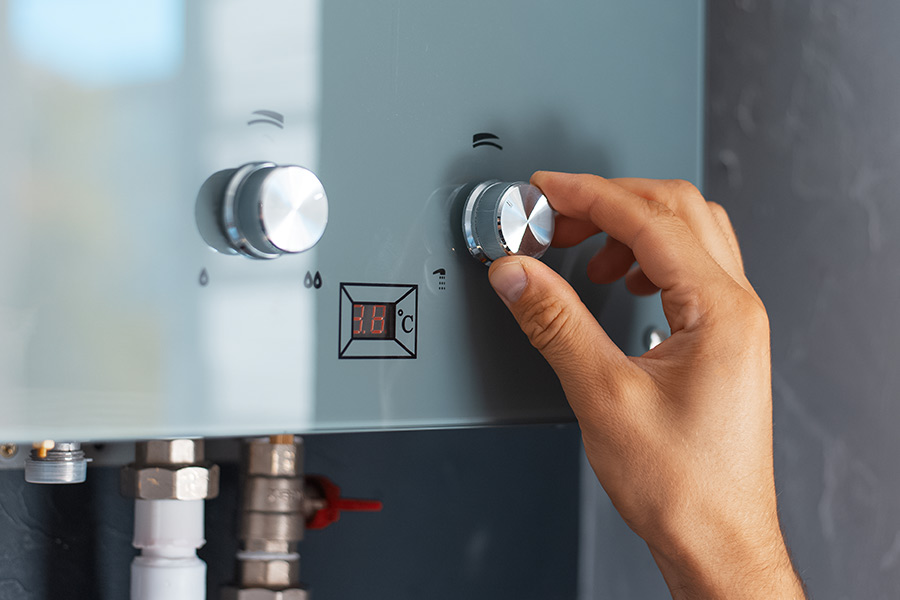
Tankless systems also feature advanced temperature controls, allowing you to set precise temperature levels for enhanced safety and comfort — particularly useful for homes with young children or elderly family members where scalding risk needs to be minimized.
Energy Efficiency Boost
Tankless water heaters dramatically improve energy efficiency by heating water only when needed, eliminating the standby heat loss that makes traditional tank systems so inefficient.
With a conventional storage water heater, energy is continuously consumed to keep 40–80 gallons of water hot around the clock — whether you’re using it or not. Tankless systems activate only during actual usage, ensuring no energy is wasted maintaining temperature in an idle reservoir.
According to the U.S. Department of Energy, tankless water heaters are:
-
24–34% more energy efficient than conventional storage tanks for homes using 41 gallons or less of hot water daily
-
8–14% more energy efficient for homes that use a lot of hot water (around 86 gallons per day)
-
Up to 50% more efficient when a tankless unit is installed at each hot water outlet (point-of-use installation)
Tankless systems also feature modulating burners that automatically adjust heating power based on real-time demand, further reducing unnecessary energy expenditure and lowering your monthly utility bills.
Space-Saving Design
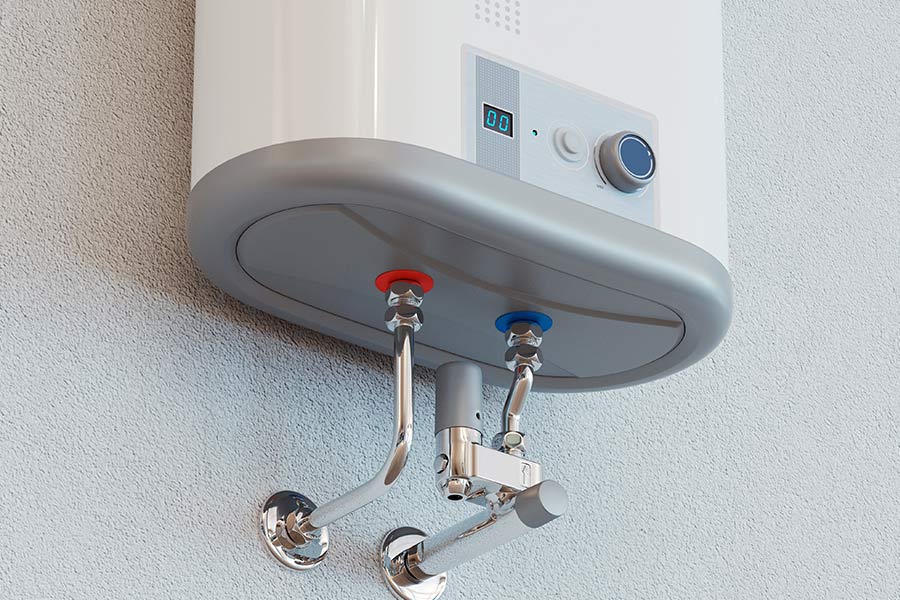
A tankless water heater’s compact, wall-mounted design frees up significant floor space compared to a traditional 40–80 gallon storage tank — opening up room in utility closets, basements, and garages for storage or other household equipment.
These units adapt to virtually any spatial constraint:
-
Wall-mounted — installable in closets, utility rooms, or cramped basement corners
-
Near point of use — can be positioned closer to bathrooms or kitchens, reducing the wait for hot water and minimizing water waste
-
Outdoors — certain models support exterior wall installation with weatherproof enclosures
-
Attic or garage — flexible venting options allow installation in locations impractical for bulky storage tanks
The minimalistic, modern profile also aligns with contemporary home design preferences — presenting a clean, unobtrusive appearance compared to the industrial look of a traditional water heater tank.
Lower Utility Bills
Switching to a tankless water heater reduces your utility bills by only heating water on demand — eliminating the energy wasted in keeping a full tank of water hot 24 hours a day, 7 days a week.
With conventional water heaters, standby energy losses account for a significant portion of your monthly water heating costs. The U.S. Department of Energy estimates that water heating accounts for approximately 18% of a typical home’s energy use — making it the second-largest energy expense in most households. Switching to a tankless system directly reduces that figure.
Depending on your household’s water usage and local energy rates, upgrading to a tankless unit can save $100 or more per year on energy costs — with savings increasing in larger households or homes currently using older, less efficient tank heaters.
Longer Lifespan
Tankless water heaters significantly outlast traditional storage tank models, providing a more durable and cost-effective long-term investment.
| Water Heater Type | Average Lifespan |
| Traditional storage tank | 10–15 years |
| Tankless (gas) | 20+ years |
| Tankless (electric) | 20+ years |
The extended lifespan of tankless units is attributed to a design that minimizes the two biggest causes of water heater failure — corrosion and sediment buildup — both of which are direct consequences of storing large volumes of water.
Key durability advantages include:
- No tank corrosion — without a storage tank, there’s no standing water to accelerate rust and mineral degradation
- Fewer failure-prone parts — streamlined design means fewer components that can break down over time
- High-grade materials — quality construction resists corrosion and ensures reliable long-term operation
- Advanced technology — modern tankless units are engineered for longevity, with self-diagnostic features that flag issues early
- Simpler maintenance — routine upkeep is less involved and less frequent than traditional tank maintenance
Reduced Carbon Footprint
Choosing a tankless water heater is one of the most impactful steps a homeowner can take to reduce their household’s environmental footprint.
Unlike traditional water heaters that constantly maintain hot water in a reservoir, tankless systems heat water only when you use it — eliminating standby energy losses and directly reducing your home’s overall energy consumption.
Tankless water heaters typically operate at 80–90%+ efficiency, compared to conventional tank heaters which average around 60–70% efficiency. This efficiency gap translates to fewer fossil fuels burned per gallon of hot water produced.
Many tankless models carry ENERGY STAR certification, independently verified to meet strict energy efficiency standards set by the U.S. Environmental Protection Agency. Choosing an ENERGY STAR-certified unit ensures you’re investing in a product that’s been tested and validated to deliver meaningful environmental and cost benefits.
Additionally, tankless units are more compact, require fewer raw materials to manufacture, and generate less waste over their lifecycle — further reducing their overall environmental impact compared to traditional systems.
Consistent Water Temperature
With a tankless water heater, you’ll experience consistent water temperature by heating water directly as it flows through the unit. This ensures a steady supply without the fluctuations common in traditional systems. This precision is essential for maintaining comfort and efficiency, especially in homes where multiple water outlets are used simultaneously. Unlike tank-based systems, which can suffer from temperature drops as the stored hot water depletes, tankless units provide a continuous flow of hot water.
Here’s why consistent water temperature is beneficial for a service-focused household:
- Reliable Comfort: Whether it’s a morning shower or washing dishes, you won’t face unexpected cold spells.
- Efficient Operation: These units reduce energy waste by heating only the water you use, aligning with your commitment to sustainability.
- Reduced Wear: Consistent temperatures extend the life of your plumbing, sparing you from frequent repairs.
- Customizable Settings: Many models offer precise temperature controls, allowing you to meet your household’s specific needs.
- Enhanced Safety: With stable temperatures, the risk of scalding is minimized, protecting vulnerable family members.
Incorporating a tankless water heater supports your goal of serving others efficiently and enhances your home’s overall functionality.
Increased Home Value
Installing a tankless water heater is a home improvement that pays dividends both while you live in the home and when you’re ready to sell.
Tankless systems appeal strongly to today’s homebuyers, who increasingly prioritize energy efficiency, lower operating costs, and modern infrastructure when evaluating a property. A home equipped with a tankless water heater signals to buyers that they’re inheriting a more efficient, lower-maintenance system with a longer remaining useful life than a traditional tank — a meaningful advantage in a competitive market.
Key value drivers include:
- Lower long-term operating costs — buyers recognize the utility savings as a direct financial benefit
- Longer remaining lifespan — a recently installed tankless unit may have 15–20+ years of life remaining, compared to a tank heater nearing replacement
- Modern energy profile — aligns with smart home and sustainability trends that are increasingly important to buyers
- Space efficiency — the compact footprint frees up space buyers can use immediately
For homeowners considering selling within the next several years, a tankless water heater installation is one of the few upgrades that offers both immediate household benefits and measurable resale return.
Minimal Maintenance Needs
Tankless water heaters require significantly less maintenance than traditional storage tank models — one of their most practical long-term advantages for busy homeowners.
Key maintenance advantages include:
- Self-cleaning features — many models include built-in self-cleaning technology that reduces mineral deposit buildup, a primary cause of efficiency loss over time
- Longer lifespan with fewer repairs — with fewer mechanical components prone to failure, unexpected breakdowns are significantly less common
- Annual inspections only — in most installations, a single annual check-up is all that’s needed to maintain peak performance and manufacturer warranty validity
- Less frequent part replacement — the streamlined design means fewer consumable components to monitor and replace
- Descaling in hard water areas — homes with hard water should descale the heat exchanger annually or as needed; this is a straightforward procedure a technician handles during the annual visit
Compared to traditional tank heaters — which require annual sediment flushing, anode rod replacement every 3–5 years, and more frequent leak and pressure relief valve checks — tankless systems offer a notably simpler, lower-cost maintenance profile over their lifespan. Contact our team to schedule your annual tankless water heater inspection.
Flexible Installation Options
Tankless water heaters offer installation flexibility that traditional storage tanks simply can’t match — adapting to virtually any home layout, size, or architectural constraint.
Unlike traditional units that require a sizable footprint and often a dedicated utility room, tankless heaters can be installed in a wide range of locations:
- Wall-mounted indoors — utility closets, basements, garages, or dedicated mechanical rooms
- Near the point of use — installing closer to bathrooms or kitchens significantly reduces the wait for hot water and minimizes water wasted while the line heats up
- Outdoors — direct-vent models and weatherproofed units allow exterior wall installation in appropriate climates
- Multiple units — for very large homes, two smaller tankless units can be installed in different areas of the house, delivering faster hot water delivery and greater overall capacity than a single large tank
Venting options add further flexibility: gas models support direct venting through an exterior wall (no chimney required), while electric models require no venting at all — both significantly expanding where the unit can be placed compared to traditional flue-vented tank heaters.
Conclusion
By choosing a tankless water heater, you’re not just upgrading your home but embracing a future-forward technology akin to swapping a horse-drawn carriage for a sleek electric car. You’ll enjoy endless hot water, lower energy bills, and a compact design that fits into modern spaces. With minimal maintenance and increased home value, it’s a savvy investment in comfort and efficiency. This decision aligns perfectly with sustainable living and innovative home solutions.
Frequently Asked Questions
How Does a Tankless Water Heater Affect Water Pressure in My Home?
A tankless water heater doesn’t inherently affect your home’s water pressure. It delivers hot water on demand, guaranteeing consistent flow rates. Confirm your plumbing system supports adequate pressure for peak performance, benefiting those you serve with reliable hot water.
What Are the Upfront Costs of Installing a Tankless Water Heater?
Imagine investing in a reliable tool that never breaks down. Installing a tankless water heater costs $2,000 to $5,000. It’s like planting a seed for efficient service, benefiting others through energy savings and endless hot water.
Are Tankless Water Heaters Compatible With Solar Water Heating Systems?
Yes, you can integrate tankless water heaters with solar water heating systems. They offer an efficient backup, ensuring a continuous hot water supply. Doing this maximizes energy savings while supporting environmentally conscious water heating solutions for others.
Can a Tankless Water Heater Handle Multiple Simultaneous Hot Water Demands?
You can handle multiple simultaneous hot water demands with a tankless water heater by ensuring it has a high enough flow rate. Choose a model with adequate capacity to serve your household’s needs efficiently and reliably.
How Do I Choose the Right Size Tankless Water Heater for My Household?
To choose the right size tankless water heater, calculate your household’s peak hot water demand in gallons per minute. Consider simultaneous usage points like showers and appliances. Match this with a unit’s flow rate and temperature rise capabilities.