




Simi Valley runs east to west through a long inland valley hemmed in by the Simi Hills, Santa Susana Mountains, and Rocky Peak. That enclosed geography channels cold air through the corridor on winter nights and holds it there, producing temperatures that regularly surprise people who assumed Southern California meant mild winters. When your furnace isn’t keeping pace with a January night in Simi, the house gets cold fast and stays that way.
Furnaces rarely fail without warning. Here are the signs that yours is trying to tell you something:
Paying attention to these early means you get to choose when the repair happens rather than having the furnace make that decision for you.
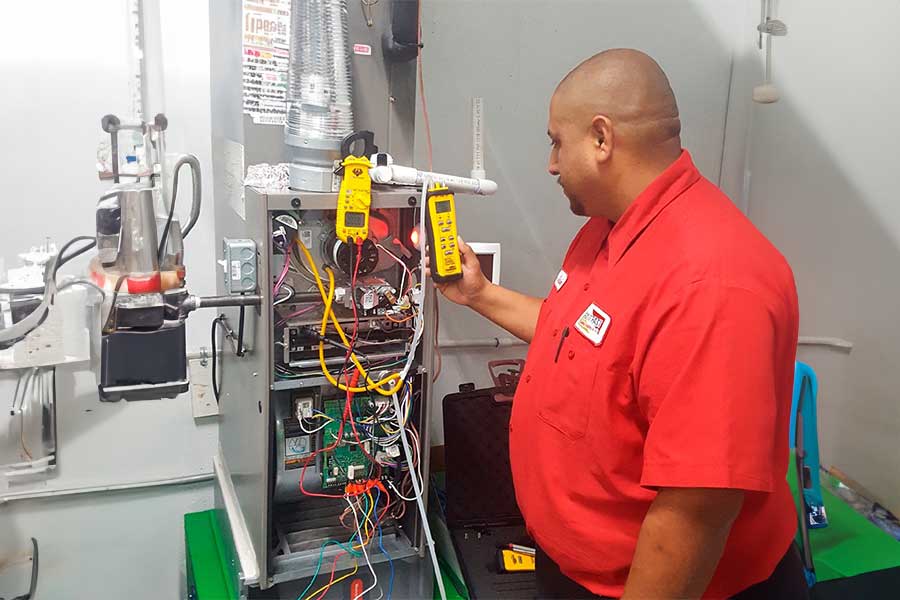
Simi Valley’s housing landscape is a mix of tracts built during the 1970s and 1980s and newer construction that came up in the hillside developments through the 1990s and 2000s. That range means we work on everything from original single-stage gas furnaces that have been running for 40-plus years to more recent two-stage systems showing early wear. The problems we encounter reflect that spread.
Older homes in the central valley corridor frequently have furnaces with original heat exchangers that are well past their intended lifespan. Thermal fatigue from decades of cycling through Simi’s genuine seasonal temperature shifts leads to stress fractures that aren’t visible from the outside but show up clearly during inspection. In the hillside developments around Wood Ranch and toward the eastern end of the valley, longer duct runs and attic-mounted systems create airflow challenges that place extra load on blower motors and can accelerate component wear in ways that don’t always trace back to an obvious cause.
Santa Ana wind conditions hit Simi Valley directly, pulling dry, particulate-heavy air through the valley corridor and into return systems on exactly the nights homeowners are trying to run their heat. We factor that seasonal pattern into every diagnostic because what looks like a mechanical failure is sometimes a system that’s been starved of clean airflow for months.
Se Habla Espanol
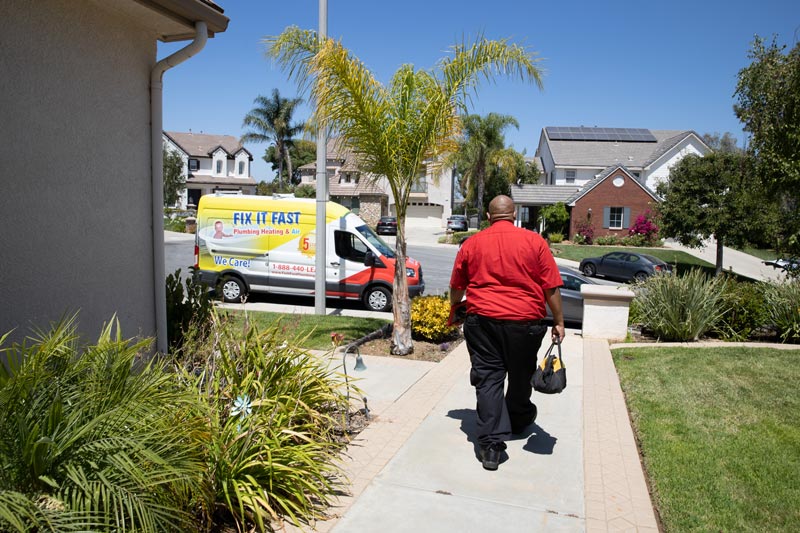
Fix It Fast approaches every furnace call in Simi Valley as a full system review, not a single-part swap. Before we recommend anything, we work through the heat exchanger, burners, ignition assembly, flame sensor, blower motor and capacitor, draft inducer, flue connections, and thermostat operation. Simi Valley homes with systems installed during the tract building era often have components that have never been serviced, and a thorough first look catches the full picture rather than just the presenting issue.
What we find gets explained in plain terms. We tell you what’s failing, what’s showing wear, and what’s in good shape. If a repair is the right move, we do it efficiently and test everything before we leave. If the system has reached a point where continued investment doesn’t make financial sense, we lay out the replacement option honestly and let you decide without pressure.
We work across all furnace types, fuel sources, and system ages. Simi Valley’s mix of older central-valley homes and newer hillside construction means we regularly handle everything from aging single-stage units to more complex variable-speed systems. Emergency service is available any hour because cold houses don’t schedule themselves for convenient times.

We got a call on a Friday afternoon in late November from a homeowner named Marcus who lives in the Wood Ranch area on the east end of the valley. He’d turned the heat on for the first time that season and noticed the house wasn’t warming up despite the furnace running continuously. With overnight lows forecast in the mid-30s and a weekend ahead, he didn’t want to find out how cold it would get by morning.
Our technician arrived that evening. The furnace was running but the blower motor capacitor had failed, which meant the blower was turning too slowly to move adequate air through the system. The furnace was producing heat but couldn’t distribute it, so the unit kept running in a loop trying to satisfy a thermostat it could never reach. It’s the kind of issue that reads as a vague complaint until you pull the access panel and check the components directly.
We replaced the capacitor, confirmed the blower was running at full speed, and cycled the system through several complete heating runs before wrapping up. Marcus had full heat by early evening. He mentioned the system had been making a faint humming noise for a couple of months, which in hindsight was the capacitor beginning to fail. We added a note to follow up before next season so it doesn’t catch him off guard again.

Fix It Fast Plumbing Heating & Air is a family-owned business and Ventura County’s recognized best plumbing and HVAC company in 2023. We’ve built that reputation by doing the work right and treating customers honestly, and we bring exactly that to every call we take in Simi Valley.
When you call us, here’s what to expect:
We don’t cut corners, and we don’t disappear after the invoice. Every job we do here is another reason a neighbor calls us next time.
Furnace repair in Simi Valley, CA from Fix It Fast Plumbing Heating & Air. Family-owned, locally trusted, and available 24/7 for heating emergencies across Ventura County.

The valley’s enclosed geography channels and holds cold air overnight in a way that coastal and more open communities don’t experience. Combined with the lack of marine influence, winter lows in Simi regularly drop into the 30s and occasionally lower, which means heating systems here carry a real workload through the season.
Not automatically, but a system that old deserves a careful evaluation. Many 1980s furnaces are significantly less efficient than modern equipment, and if major components are starting to fail, the repair cost relative to replacement value shifts quickly. We’ll give you an honest assessment so you can make a decision that fits your situation and budget.
It usually means the system is producing heat but something is preventing it from being distributed effectively. A failing blower motor or capacitor, a severely restricted filter, or a duct leak can all cause this. In some cases it points to a heat exchanger issue. A technician can identify the cause quickly with a proper diagnostic.
The valley corridor runs in a direction that channels Santa Ana wind events through the area with some force. That drives fine particulate matter into return vents and can clog filters within days during a heavy wind event. It also deposits debris in burner assemblies, which can affect combustion efficiency and ignition reliability heading into heating season.
Yes. Our service membership options include pre-season furnace tune-ups that check all major components before you need the heat most. For homeowners with older systems, regular maintenance is one of the most cost-effective ways to extend equipment life and avoid emergency calls on a cold winter night.
Se Habla Espanol
